
Funded by the National Lottery Heritage Fund Scotland, Caring for the Collection is a project that will focus on Art in Healthcare’s vast art collection, enabling us to undertake a programme of maintenance and conservation of artworks currently in our art store.
We are delighted to have the support to recruit two technical roles, who will be dedicated to working with collection artworks and improving how they are stored safely. In November, we appointed Giulia Gentili, our Technician, who brings several years of experience working with a wide range of artists and organisations as an art technician, fabricator and artist.
Followed by the recruitment of our Collection Technician Apprentice, Mina Brennan, who will work closely alongside Giulia. Together, they will review, maintain and restore artworks, with the aim of placing them in hospitals, care homes and community spaces across Scotland. In addition to gaining hands on experience working with the collection, Mina will gain a Museum and Galleries Technician Modern Apprenticeship [SCQF level 7] qualification.
As part of this project, and to celebrate Art in Healthcare’s 35th Anniversary, Mina has launched a blog exploring 35 works from the Art in Healthcare Collection and her findings from her apprenticeship.
Welcome to the fifth blog post from the Collection Technicians!
This week I was away from the collection to visit Lauriston Castle and help with their Spring Clean. The spring clean focuses on a detailed analysis of all the rooms in the castle, where environment and objects are accounted for and maintained. This is done in February before the busy season starts, it is an important part of conserving the castle and it’s history. I arrived at Lauriston castle, headtorch in hand hoping to see secret rooms and spiral staircases, I was not disappointed!
Lauriston Castle was originally medieval but was destroyed during the ‘Eight Year War’ between England and Scotland in the 16th century. This conflict was led by Henry the VIII who wanted to break the alliance between Scotland and France by arranging a future agreement for a marriage between his son and Mary Queen of Scots. Lauriston Castle was rebuilt in 1590 and went on to be bought sold and extended by different families until the Reids gifted the building and it’s contents to Scotland. Part of the condition of their gift was that Lauriston Castle remained it’s current condition and unchanged. This means it has been perfectly preserved in it’s Edwardian state as the Reids left it.
A lot goes into preserving and maintaining a building of this age. High levels of knowledge and care are needed to clean items which are over 100 years old. Luckily Lauriston castle is in great hands as the team there know so much about conserving objects and places. Some of the tasks I got up to included dusting and itemising silverware and cleaning antique upholstery, as well as dusting many many books. I also was asked to identify some of the bugs and pests which have been roaming the castle, with the castle being so old it attracts some unwanted visitors like woodworm and carpet beetles. It’s important to identify and locate any pests so the correct measures can be taken to protect the castle and its contents. To identify the pests’ traps are put out and then placed under a microscope, each pest is then identified and placed on a spreadsheet. It was interesting to see the insects in each trap, although having never seen a magnified spider before it did take a little getting used to.
Being part of the team for a few days meant I got to see a little behind the scenes of the castle. One room was accessed via a secret passage, I was told it was originally a listening room used for eavesdropping. This early form of surveillance was a common feature in 16th century castles and was called the ’Lairds lug’ in Scotland. It allowed the lord of the castle to listen in on his guests who were in the great hall via a hidden set of pipes and chambers.
Being part of the Lauriston castle clean was such an exciting opportunity and it was extremely rewarding to know I’ve helped to preserve a part of history.
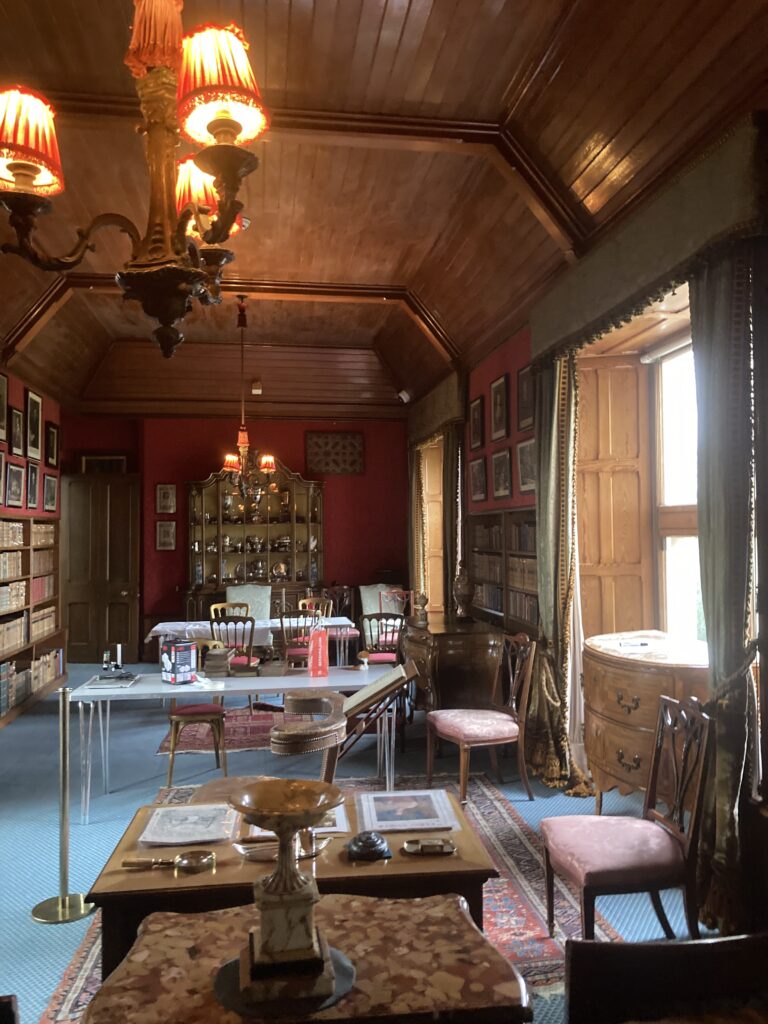
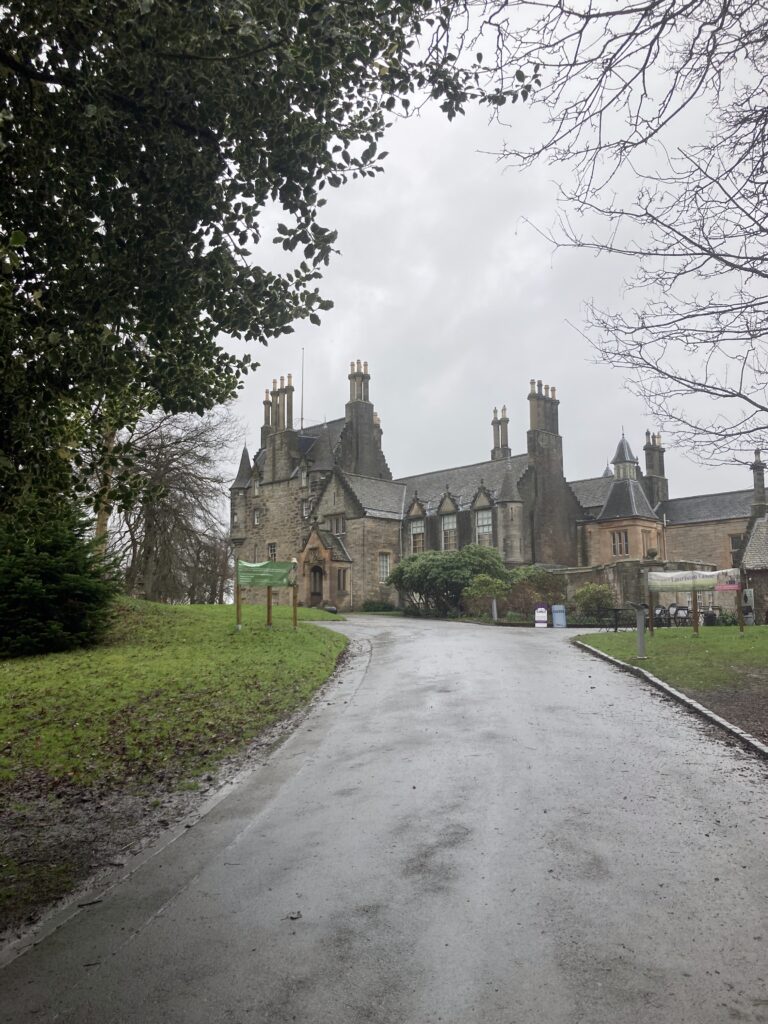
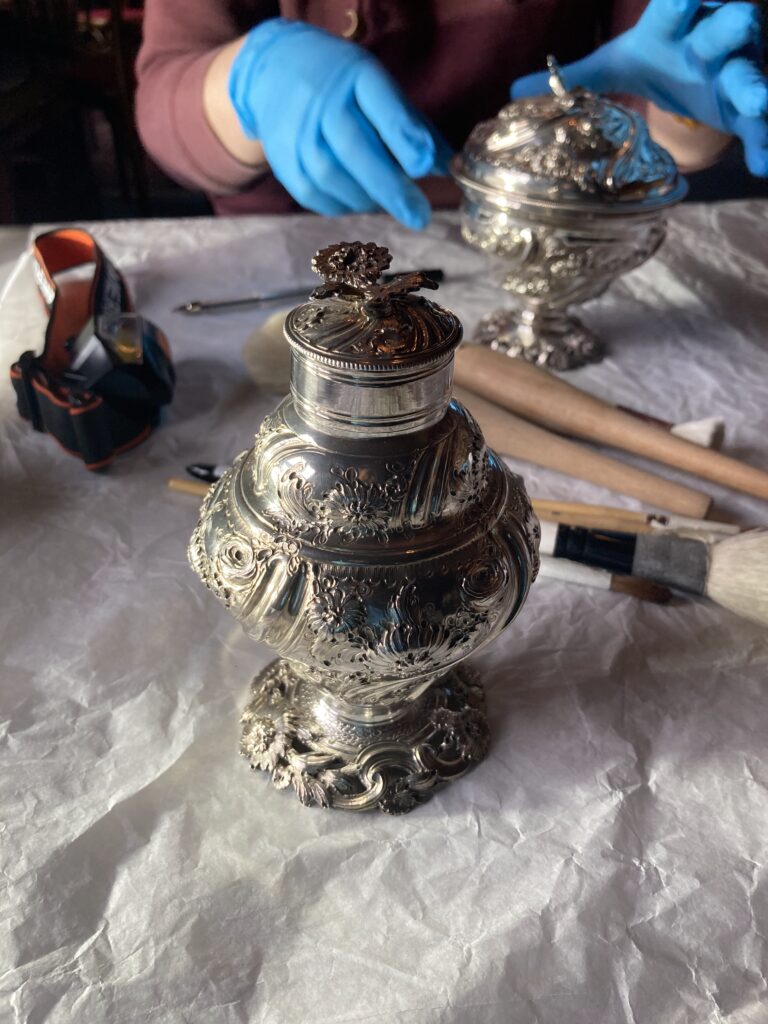
Images: 1) One room of the interior of Lauriston Castle 2) The driveway leading up to Lauriston Castle with a view of the outside of the building 3) Antique Silverware from the Castle being dusted.
Caring for the Collection is made possible with The National Lottery Heritage Fund Scotland.
Thanks to National Lottery players, we will be able to dedicate time to improve the condition of our artworks currently in our store, so that they will be able to be displayed in health and social care settings across Scotland.

Museum & Galleries Technician Modern Apprenticeship is supported by Museums Galleries Scotland provider of the apprenticeship, mentor and SCQF level 7

25 February 2026 by
Amy Miles